
How to combine a luxury eco-lodge, Tortuguero National Park and Puerto Viejo into one unforgettable adventure
If someone asked me to plan the perfect Costa Rica itinerary, I probably wouldn’t send them to a beach resort for a week. I’d tell them to experience three completely different Costa Ricas. One where you arrive by raft and there are no roads. And one where life still moves to the rhythm of bicycles, reggae, and the Caribbean Sea.
That’s exactly what I experienced during a journey through Costa Rica’s Caribbean side, and it completely changed how I think about the country.
Most visitors head to Costa Rica’s Pacific coast—and for good reason. But if you’re looking for an itinerary that combines adventure, wildlife, authentic culture, and fewer crowds, Costa Rica’s Caribbean side deserves a place on your list.
Start Slowly at Finca Rosa Blanca
Most international flights arrive in San José later in the day, and many travelers immediately begin the drive toward the rainforest or beaches. I don’t recommend it. Instead, I spent my first night at Finca Rosa Blanca, a charming coffee plantation just outside San José.
Traveling solo, I immediately felt comfortable and safe.
The plantation tour was fascinating, the scenery was beautiful, and after a long day of travel, it was exactly the kind of peaceful beginning I hoped for. The food was outstanding, and I found myself slowing down almost immediately.
Arriving at a Luxury Lodge…by Raft
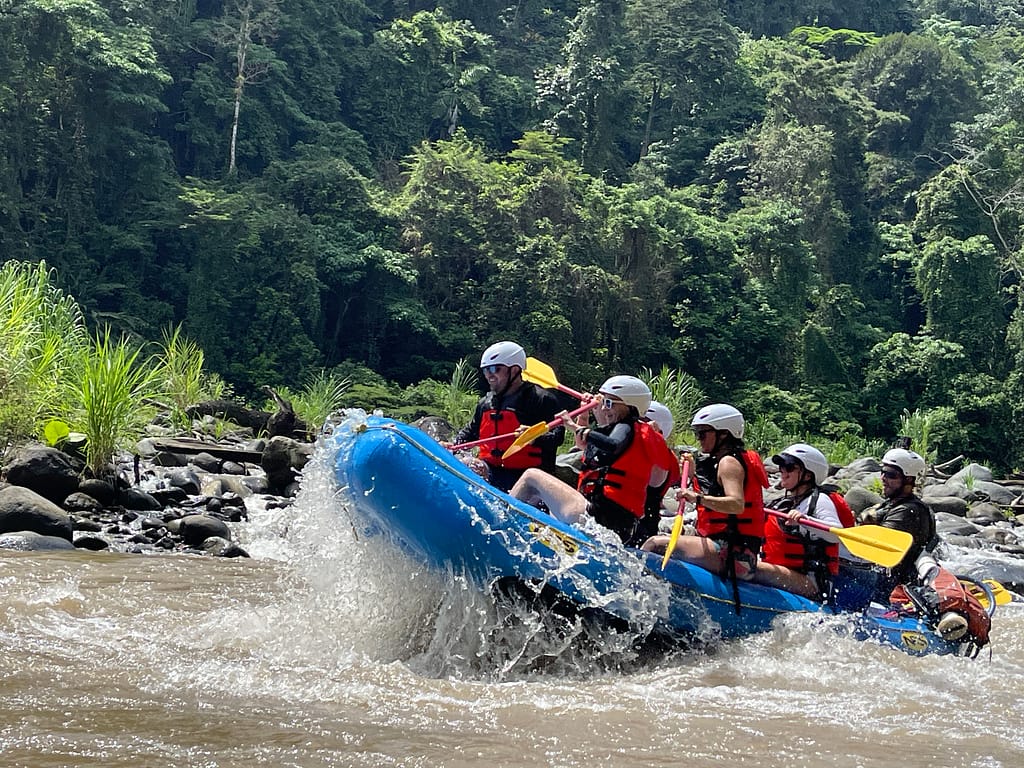
One of the most memorable hotel arrivals I’ve ever experienced didn’t involve a private transfer, but a raft. Pacuare Lodge sits deep within the rainforest and is most famously reached by rafting the Pacuare River, considered one of the world’s great whitewater rafting experiences.
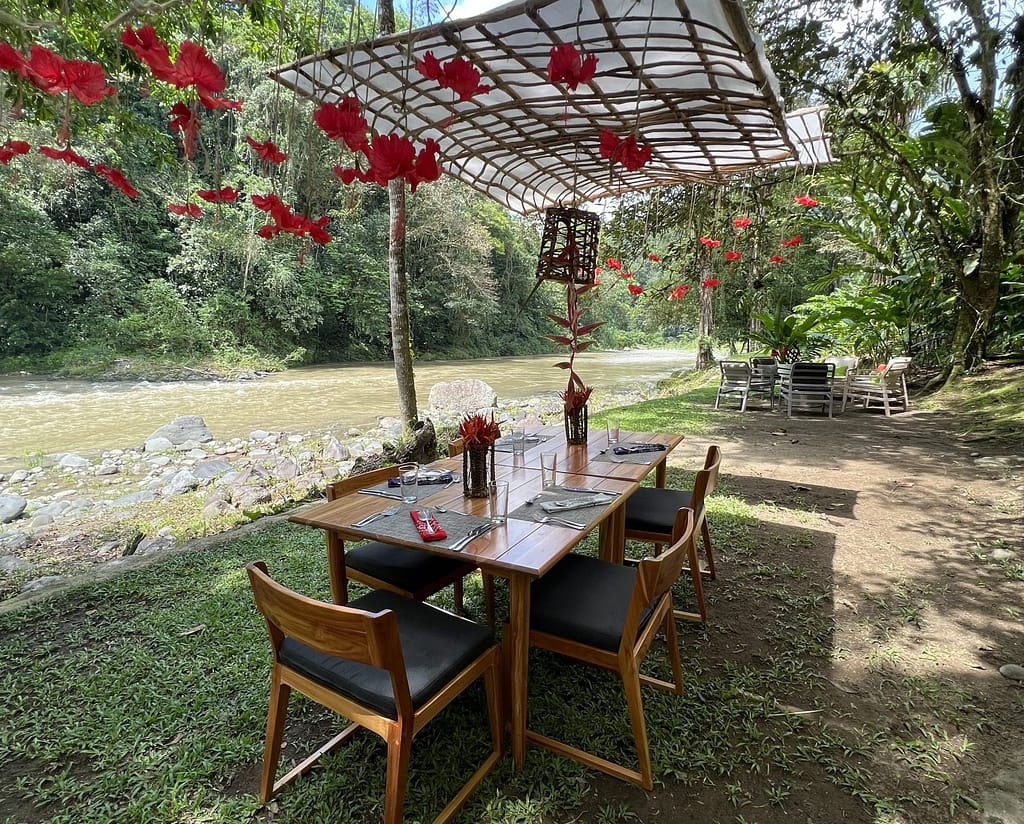
I had never been whitewater rafting before. I was excited and nervous. Within minutes, I was wondering if I’d made a terrible decision. But it was a wonderful experience! Our guide quickly put us at ease. Before long, our group was paddling together like we’d been doing it for years. Another guide kayaked ahead, monitoring the river and snapping photos along the way, while we alternated between exciting rapids, peaceful stretches of river, swimming breaks, and a picnic lunch on the riverbank.
The trip includes mostly Class II and III rapids with a few Class IV. Plenty of excitement without feeling overwhelming for beginners. And yes, if rafting simply isn’t your thing, guests can also arrive by vehicle.
Where Luxury Feels Different
Luxury at Pacuare Lodge isn’t about marble floors or extravagant chandeliers. It’s about access to a place so remote that it feels like the rainforest belongs only to you. Private villas disappear into the jungle. There are no neighboring resorts, no traffic, no crowds. Just the sounds of the river, towering trees, and a level of peace that’s increasingly rare to find.
We spent our days hiking, zip-lining through the canopy, rappelling waterfalls, and exploring the rainforest with exceptional local guides. We enjoyed delicious meals, including a breakfast in a tree that we ziplined to get to. It remains one of the most unique luxury lodges I’ve ever experienced.
The Conversation I’ll Never Forget
One of the most meaningful experiences of the trip wasn’t adventurous at all. An employee from the nearby Cabécar Indigenous community joined us for a conversation, translated into English, about his family’s traditions and way of life.
I’ll admit something. Before that conversation, I probably viewed Indigenous communities through a very Western lens. I assumed that modernization automatically meant a better quality of life. Listening to him changed that. He spoke about why many members of his community choose to preserve their traditions rather than move to the cities. He described a life centered around family, nature, and community—not one driven by convenience or technology.
What struck me most wasn’t what he said, but how genuinely content he was. When the conversation ended, I didn’t leave thinking about how much they lacked. I left realizing how much they had.
Travel has a wonderful way of challenging assumptions.
This conversation reminded me that sometimes the greatest luxury isn’t having more. Sometimes it’s being completely content with what you already have.
Navigating Costa Rica: From Sky to Sea
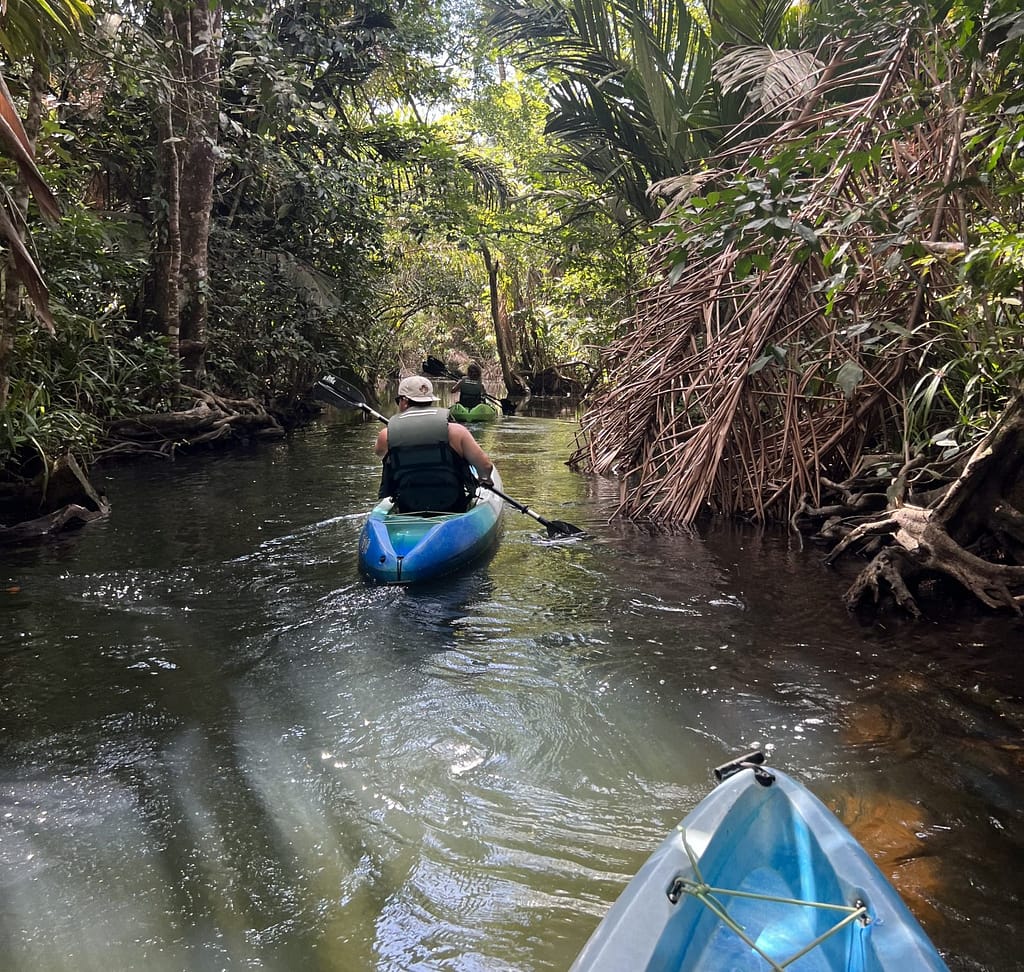
The next stop couldn’t have been more different. Tortuguero National Park is famous for its sea turtles, incredible biodiversity, and winding network of canals. There are no roads connecting the village or resorts – everything happens by boat.
Kayaking through the canals was surprisingly peaceful and one of my favorite activities of the trip. Monkeys seemed to appear around every bend, and every outing felt like a wildlife safari. We also shared breakfast with a local family; a wonderfully authentic experience that offered another glimpse into everyday life in this unique part of Costa Rica.
If you’re looking for polished luxury, Tortuguero probably isn’t your destination. If you’re looking for wildlife and authenticity, it’s unforgettable. The accommodations here are comfortable rather than luxurious, but that’s not why you come. You come because there simply isn’t another place quite like it. And the service and dining were top-notch.
Puerto Viejo: Costa Rica’s Caribbean Soul
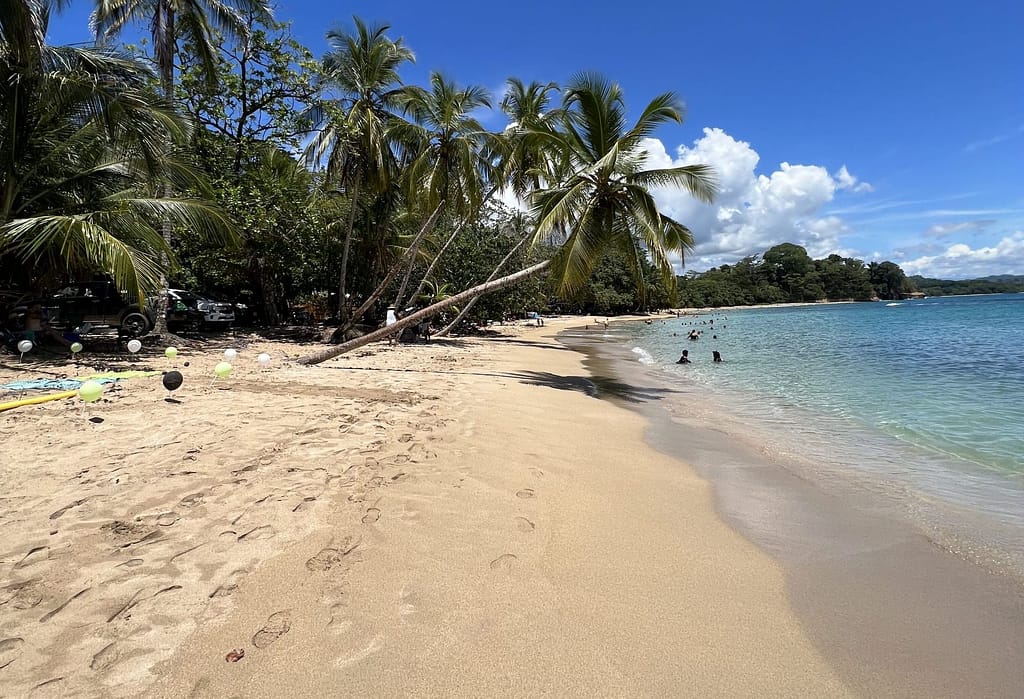
Our final stop was Puerto Viejo. If Costa Rica’s Pacific coast feels polished, Puerto Viejo feels wonderfully relaxed.
Old bicycles.
Reggae music.
Beach cafés.
Yoga studios.
Fresh seafood.
Colorful streets.
It’s the kind of place where people slow down without even realizing it.
We stayed at Hotel Aguas Claras, a charming boutique property surrounded by tropical gardens just a short walk from the beach.
The accommodations ranged from hotel rooms to private and shared villas. The experience here is so unique. It’s a place that still feels authentic, where independent restaurants and shacks outnumber chain stores and fresh seafood appears on nearly every menu. Some of the best ceviche I’ve ever eaten came from this stretch of coastline.
Don’t Be Afraid of the Small Planes
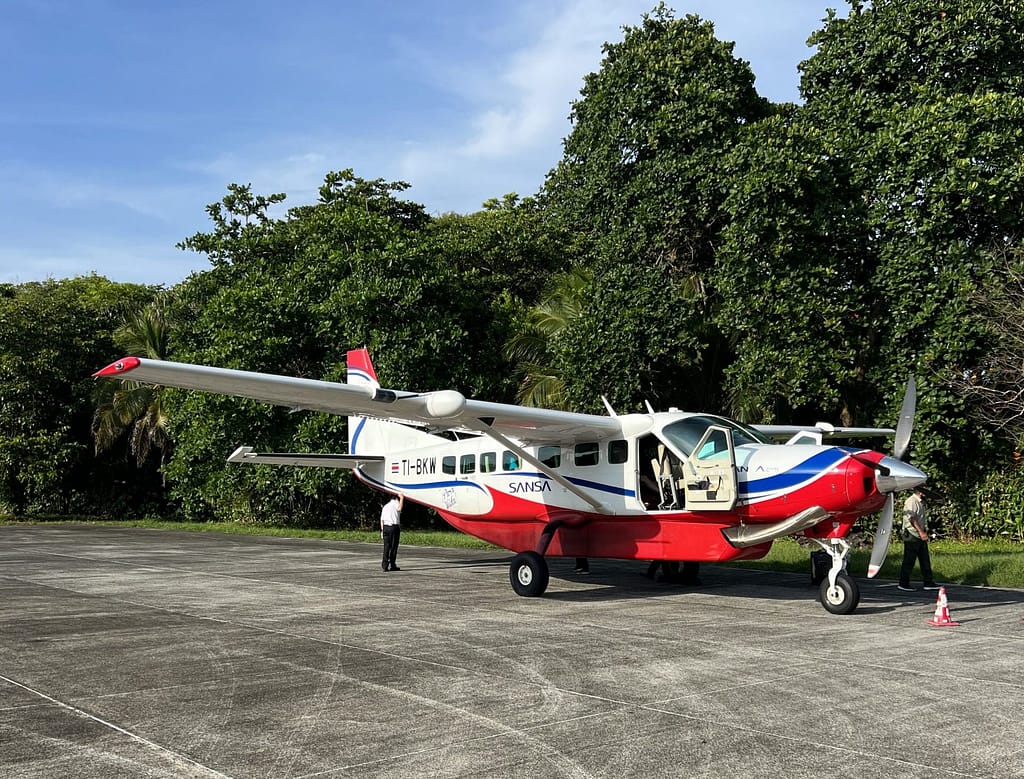
To connect the different regions of Costa Rica, we flew aboard several small Cessna aircraft. To be honest, I wasn’t excited about that part. I was nervous. But after the first easy flight, I realized these pilots fly these routes every single day. They were incredibly skilled, and the aerial views of the rainforest, rivers, and coastline were incredible. We could actually see the turtles swimming to the shore to lay their eggs! And it’s really the best way to get around – it turns a 6- 8 hour drive into a 45-minute flight.
Who Is This Itinerary Perfect For?
This itinerary is ideal for travelers who:
- Love wildlife and nature
- Want soft adventure without sacrificing comfort
- Prefer boutique properties over large resorts
- Enjoy meaningful cultural experiences
- Appreciate fewer crowds and slower travel
- Have 8–12 days to explore
It’s for curious travelers who are looking for access to remote places, extraordinary wildlife, people and cultures most travelers never meet, and experiences that stay with you long after you’ve returned home.
Final Thoughts
Before this trip, I expected Costa Rica’s Caribbean coast to feel somewhat similar to the Pacific. I couldn’t have been more wrong. It felt like an entirely different country. Different culture, food, and perspective.
And that’s exactly why I think it deserves a place on more travelers’ itineraries.
If you’re looking for a Costa Rica vacation that includes OR goes beyond the typical beach resort, I’d love to help design an itinerary that fits your travel style.