
Ireland, Your Way
Ireland looks compact on a map, which makes it tempting to fit too much into one trip. But narrow roads, scenic detours and the desire to stop along the way can turn a seemingly simple itinerary into a rushed one.
The challenge is deciding which regions suit you, how long to stay in each place, where to stay, and how to connect everything comfortably.
Whether you want to combine Dublin with the countryside, trace your family history or build a scenic route along the west coast, I can create an itinerary that balances memorable experiences with enough time to enjoy them.
Why You’ll Love Ireland
Ireland draws you in with its dramatic landscapes, layered history, lively cities and unmistakable warmth. One day might begin beside a windswept coastline and end in a cozy pub filled with traditional music. Along the way, you’ll encounter medieval towns, storybook castles, elegant country estates and villages where conversation still feels like part of the experience.
The country is compact enough to explore on one trip, but Ireland rewards travelers who resist the urge to see everything. Whether you’re drawn to ancestral history, rugged scenery, charming towns, golf, food, or simply the pleasure of slowing down, Ireland offers a deeply personal kind of travel.
Ireland at a Glance
Best time to visit: May through October offers the longest days and generally mild conditions. May, June, September, and early October can provide a particularly appealing balance of weather and manageable crowds.
Ideal trip length: Eight to twelve nights allows time for Dublin and two or three additional regions without spending every day in transit.
Getting there: Dublin is the primary international gateway. Shannon is especially convenient for western Ireland and works well for an open-jaw itinerary.
Getting around: Dublin is best explored without a car. For the countryside, a rental car, private driver, or combination of trains and private transfers may be appropriate.
Currency: The euro.
Language: English is spoken throughout the country. Irish, or Gaeilge, is also an official language and appears on many road signs.
Best for: Couples, families, multigenerational trips, heritage travel, scenic road trips, golf, food and culture.
The pace: Unhurried. Ireland looks small on a map, but narrow roads, scenic stops, and changing weather make drive times longer than many visitors expect.
Where To Stay
Ireland’s accommodations are part of the experience. I like pairing a centrally located city hotel with a historic manor, a country estate, or a smaller, atmospheric property.
Dublin
Just off Grafton Street, The Westbury is an elegant, exceptionally well-located choice for first-time visitors. Trinity College, St. Stephen’s Green, Dublin Castle, shopping and many restaurants are within walking distance. It feels sophisticated while still placing guests in the middle of the city.
County Kildare
Carton House, a Fairmont Hotel
Set on an expansive historic estate near Maynooth, Carton House offers the grandeur of an Irish country retreat along with a spa, golf and refined dining. Its location near Dublin Airport makes it particularly appealing for a memorable first or final night.
Kilkenny and Ireland’s Ancient East
This elegant country estate offers a peaceful contrast to Dublin while remaining convenient to Kilkenny. It’s a strong choice for travelers who appreciate history, beautiful grounds, golf, outdoor activities, and a more relaxed pace.
Killarney
A historic Victorian hotel surrounded by gardens in the heart of Killarney, the Great Southern combines a sense of occasion with an extremely convenient location. It works well for exploring Killarney National Park, the Ring of Kerry, and the Dingle Peninsula, while still letting you walk into town for dinner or music.
County Clare
For travelers who want the quintessential Irish castle experience, Dromoland delivers a wonderfully polished stay with elegant accommodations, beautiful grounds and traditional estate activities. It can also pair well with Shannon Airport.
Galway and Connemara
The best location in this region depends heavily on the itinerary. Some travelers will prefer a stylish hotel in Galway for easy access to restaurants and music, while others will enjoy retreating to a country-house hotel amid the lakes, mountains and quiet landscapes of Connemara.
Ireland Experiences Worth Your Time
Discover Dublin Beyond the Pub Scene
Dublin deserves more than a quick arrival night. Visit Trinity College and the Book of Kells Experience, explore Dublin Castle, walk through St. Stephen’s Green, and learn about the writers, rebels, and ordinary citizens who shaped the city.
A private walking tour is one of the best ways to understand Dublin’s complicated history and distinctive personality. Make time for its Georgian neighborhoods, museums and excellent restaurant scene as well.
Explore Ireland’s Ancient East
The region surrounding Dublin contains thousands of years of history. Depending on your route, highlights might include the monastic ruins of Glendalough, the medieval streets of Kilkenny, the Rock of Cashel, grand estates and some of Ireland’s most important archaeological sites.
This region is especially rewarding for travelers interested in castles, religious history, gardens and ancestral connections.
Experience Killarney National Park
Killarney is surrounded by lakes, mountains, forests and historic estates. Visit Muckross House and Gardens, take a guided walk or enjoy the scenery from a traditional jaunting car.
The town also makes a convenient base for day trips, although I recommend leaving enough time to appreciate the national park instead of treating Killarney solely as a place to sleep.
Choose the Ring of Kerry or the Dingle Peninsula Thoughtfully
Both drives are beautiful, but trying to squeeze them into consecutive rushed day trips can become exhausting.
The Ring of Kerry offers sweeping coastal scenery, mountain passes and classic viewpoints. The Dingle Peninsula feels more intimate, with archaeological sites, beaches, Irish-speaking communities and the colorful harbor town of Dingle.
Whenever possible, spend a night in Dingle rather than visiting only as a hurried day trip.
See the Cliffs of Moher—and More of County Clare
The Cliffs of Moher are spectacular, but they aren’t the only reason to visit County Clare. The Burren’s limestone landscape, prehistoric sites, coastal roads, small villages and traditional music are equally memorable.
A knowledgeable local guide can reveal details and stories you might miss when simply driving through.
Spend Time in Galway and Connemara
Galway combines colorful streets, a strong food scene, and traditional music with easy access to western Ireland’s landscapes. Beyond the city, Connemara offers mountains, lakes, bogland, beaches and a quieter, wilder side of Ireland.
A few nights in the region allow travelers to experience both Galway’s energy and the countryside beyond it.
Stay at a Country Estate or Castle
A night or two at an Irish estate isn’t simply about having a luxurious hotel room. These properties often offer falconry, horseback riding, clay shooting, golf, fishing, spa experiences and guided walks.
Leave time to enjoy the property instead of arriving late and leaving immediately after breakfast.
Seek Out Traditional Music
Traditional Irish music is best experienced in a pub or intimate venue where musicians play together informally. Some sessions begin later in the evening, and the atmosphere may be more memorable than any staged performance.
Ask locally where to go; the most rewarding option isn’t always the most heavily advertised one.
Explore Your Irish Heritage
Travelers tracing Irish ancestry may benefit from researching names, parishes, counties, and family records before arriving. A professional genealogist can help narrow the search and create a more meaningful itinerary.
Even when you can’t identify an exact family home, visiting the surrounding towns, churches, and landscapes can create a powerful connection.
Enjoy Ireland’s Food and Drink
Ireland’s culinary scene extends far beyond stew and pub fare. Look for fresh seafood, farmhouse cheeses, artisan breads, local lamb, seasonal produce, and contemporary restaurants highlighting Irish ingredients.
A whiskey tasting, brewery experience, food tour or visit to a working farm can add cultural context without making the trip entirely about sightseeing.
A Few Ireland Planning Tips
Don’t Try to See the Entire Country
Ireland’s size is deceptive. A route that looks manageable on a map may involve narrow roads, slower traffic, and numerous scenic stops.
For a first trip, Dublin plus two or three regions generally creates a better experience than changing hotels every night.
Plan for Two-Night Stays
One-night stays create more work than travelers anticipate. Each move requires packing, checking out, driving, parking, and waiting for another room.
Two- and three-night stays provide time to see the destination rather than simply pass through it.
Add Time to Every Driving Estimate
Driving in Ireland is slower than driving the same distance in the United States. Rural roads can be narrow and winding, and travelers may encounter cyclists, farm vehicles, livestock, or large tour coaches.
Posted speeds are limits, not targets. Build flexibility into each day.
Rent the Smallest Practical Car
Irish vehicles, parking spaces, and roads are generally smaller than their American counterparts. Choose the smallest automatic vehicle that can comfortably accommodate both passengers and luggage.
Do not assume a large SUV will make driving easier. On narrow country roads, the opposite is often true.
Remember That Ireland Drives on the Left
Drivers sit on the right side of the vehicle and travel on the left side of the road. Roundabouts move clockwise, and drivers entering a roundabout yield to traffic approaching from the right.
Road signs and speed limits in the Republic of Ireland are displayed in kilometers per hour.
Avoid Picking Up a Car in Central Dublin
A car is unnecessary in Dublin and can create parking and navigation challenges. Plan to collect it when leaving the city or use a private transfer to a convenient rental location outside the busiest center.
Pack for Several Kinds of Weather
Ireland’s weather can shift quickly, even on a sunny day. Bring layers, a genuinely waterproof jacket, and comfortable water-resistant walking shoes.
An umbrella is helpful in cities, but coastal winds can make a hooded raincoat more practical.
Keep Luggage Manageable
Travelers may need to carry their own bags on trains, lift them into vehicles, or navigate hotels in historic buildings. Smaller cars may not accommodate several large suitcases.
One manageable suitcase per person makes nearly every part of an Ireland itinerary easier.
Make Dinner Reservations
Popular restaurants can fill quickly, particularly in Dublin, Galway, Killarney and smaller towns during peak season. Reservations are also advisable for sought-after pubs serving dinner.
Traditional music often begins later, so consider an early dinner followed by an evening session.
Don’t Drink and Drive
Ireland has strict drink-driving laws and roadside alcohol testing. Designate a driver, arrange a taxi, or enjoy drinks within walking distance of your hotel.
Taxis can be limited in rural areas, so arrange transportation in advance.
Understand the Difference Between Ireland and Northern Ireland
The Republic of Ireland is an independent country, uses the euro, and is not part of the United Kingdom. Northern Ireland is part of the UK and uses pounds sterling.
Travelers crossing into Northern Ireland should confirm the separate UK entry requirements that apply to their nationality.
Allow Extra Time at Dublin and Shannon Airports
Dublin and Shannon offer U.S. Customs and Border Protection preclearance for many U.S.-bound flights. Travelers complete U.S. immigration and customs procedures before departure and should arrive earlier than expected.
More Ireland Inspiration
Related blog posts – coming soon!
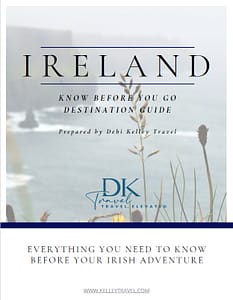
To get the most out of your trip to Ireland, download my Ireland Travel Guide, which includes everything on this page and more!
Ready to Experience Ireland?
You can spend dozens of hours comparing hotels, reading restaurant reviews, figuring out which attractions need advance reservations, and trying to determine how everything fits together.
Or you can let me take care of it.
I design personalized vacations for travelers who want an exceptional trip without managing all the research and logistics themselves. We’ll start with a conversation about how you like to travel, what you want to experience, and what’s important to you. From there, I’ll create a thoughtfully designed itinerary, handle the details, and support you throughout your trip.