Planning a trip to East Africa, especially if it includes gorilla or chimpanzee trekking, requires careful preparation to ensure you have everything you need for a seamless and enjoyable experience. Based on my recent adventure through Uganda and Kenya, here’s my comprehensive packing list to help you get ready for your own East African journey. *Please use this as a starting guide for your own packing needs, and remember to pack along anything you need for your own comfort or personal needs.*
Important Note on Luggage:
Small domestic flights in East Africa have a strict 15 kg (33 lbs) weight limit for soft luggage. It’s essential to pack efficiently and choose lightweight, flexible bags. I used my Rick Steves adjustable backpack – here is another option from Amazon.
General Packing List for East Africa Travel
Travel Documents:
- Passport (with necessary visas)
- Travel insurance documents
- Vaccination certificates (e.g., yellow fever)
- Copies of important documents
Clothing:
- Lightweight, breathable shirts (long and short-sleeved) – at least one quick-dry top. Many camps and lodges will do laundry for you, but they may not have dryers, so quick-dry tops are ideal.
- Quick-dry travel underwear for women and men. Note that these are modest cultures and prefer not to wash your underwear, so take some quick-dry travel underwear that you can wash in the sink in your room.
- Lightweight pants and shorts – a pair of convertible pants is ideal for women and men
- Light jacket or fleece for cooler evenings – I also took along a lightweight scarf that had been treated with insect repellent.
- Swimsuit
- Comfortable walking shoes
- Sandals or flip-flops – we wore these on the long safari drives and had sneakers with us “just in case.”
- Hat and sunglasses
Accessories:
- Soft-sided duffel bag or expandable backpack – we packed an extra duffel with supplies for a school visit coordinated by Pack For A Purpose – we then used that duffel to take home souvenirs
- Small daypack for excursions
- Reusable water bottle
- Travel towel
- Headlamp or flashlight
- Plug adapter and voltage converter
Toiletries and Health:
- Sunscreen and insect repellent
- Basic first aid kit (including prescription medications)
- Personal hygiene items (toothbrush, toothpaste, etc.)
- Hand sanitizer, tissues, and wet wipes
- A few disposable gloves – for the roadside bathroom breaks – you’ll thank me later for this recommendation.
Tech and Gear:
- Camera with extra batteries and memory cards – optional – I just used my iPhone
- Power adaptor
- Binoculars for wildlife viewing – optional – the safari vehicle should be equipped with at least two pairs
- Power bank for charging devices on the go – a solar-charged power bank is ideal for longer days. Also, the remote lodges are known to lose power for short periods of time
Additional Packing Lists for Specific Activities
Safari Packing List
Clothing:
- Neutral-colored clothing (avoid bright colors)
- Lightweight, long-sleeved shirts and pants (for sun protection and insect bites) – dress in layers
- Warm layers for early morning and evening game drives
- Comfortable and durable shoes – if you are in a national park, you won’t be getting out of the vehicle much; if you are on a private reserve, you may be walking/ trekking/ hiking
Gear:
- Wide-brimmed hat
- Sunscreen and lip balm with sunscreen in it
- Bug repellent
- Snacks if you get hungry
- Small toiletry kit for use in the “washroom,” which is the area behind the safari vehicle (gloves, tissues, small paper bag for trash – the “sick bags” from the planes work well!)
- Lightweight scarf or bandana (to protect from dust)
- Safari hat with a strap (to avoid losing it in the wind)
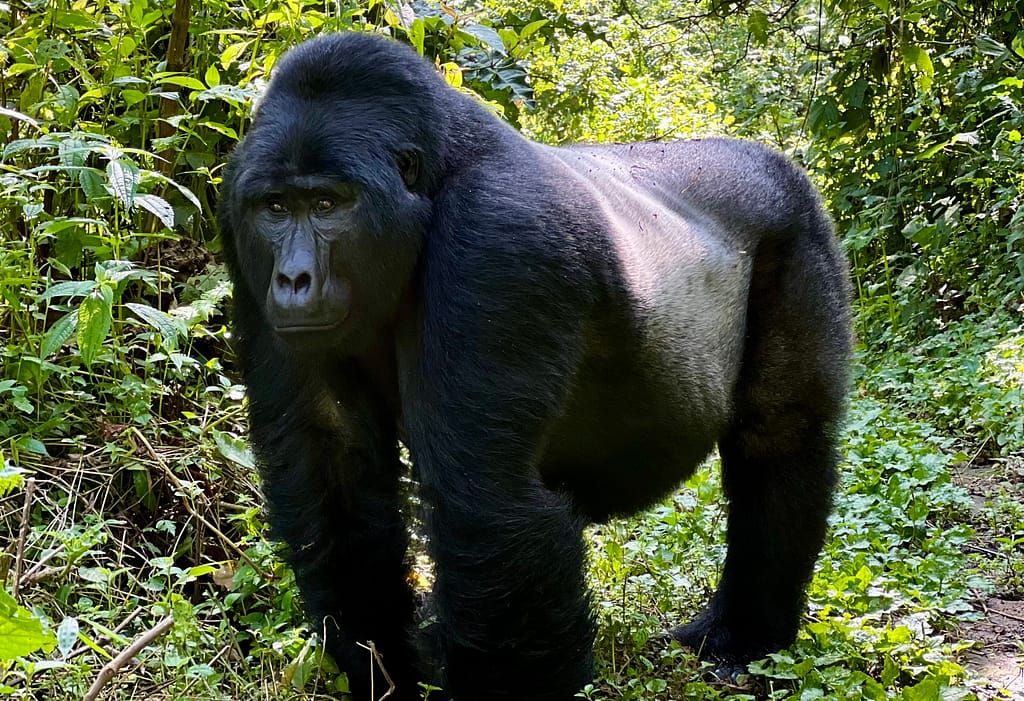
Gorilla Trekking Packing List
Clothing:
- Long-sleeved shirt and long pants (to protect against scratches and insect bites) – dress in layers – pretreated with permethrin at home before you leave for Africa.
- Waterproof jacket and pants
- Sturdy, waterproof hiking boots
- Gaiters to protect your legs from mud, thorns, branches, and insects
- Garden gloves (to protect your hands while trekking) – even if you wear them for a few minutes while getting up or down a hill to be by your “family,” they are essential to protect your hands
Gear:
- Walking stick (often provided by lodges or at the trailhead)
- Waterproof backpack
- High-energy snacks
- Reusable water bottle
- Insect repellent and sunscreen – don’t put on the insect repellent until your guide tells you to; some insects are attracted to repellent, so it depends on where you will be trekking if you should wear it or not
Chimpanzee Trekking Packing List
Clothing:
- Similar to gorilla trekking: long-sleeved shirts, long pants, and waterproof clothing – dress in layers
- Comfortable, lightweight hiking shoes
Gear:
- Lightweight daypack
- Snacks and water
- Insect repellent and sunscreen
Final Tips:
- Pack light and prioritize versatility. Layering is key for adjusting to changing temperatures.
- Soft luggage is essential due to space constraints on small flights.
- Don’t forget to leave some space for souvenirs!
With these essentials in your bag, you’ll be well-prepared for an incredible East African adventure.
Getting to East Africa
Traveling around 20,000 miles for this trip wasn’t easy—we had 11 flights, 8 drivers and guides, and stayed in 6 unique accommodations. The logistics for this type of trip are challenging. I work with some fantastic partners in East Africa, and we put together not just a once-in-a-lifetime trip but an experience that removed the stress of traveling and allowed us to fall in love with East Africa.
One of the most critical components of the trip, in our opinion, was flying business class on Delta and Kenya Airways. Flying in business class gave us access to Delta or Kenya Airways lounges at airports, and we had lie-flat seats on the long-haul flights of 14+ hours between JFK in New York and Jomo Kenyatta International Airport in Nairobi. We slept comfortably for 7-8 hours each way, and we experienced very little jet lag.
Before travel, check to ensure you have any required vaccines and medications. I received the yellow fever vaccine, and my husband traveled with a letter of medical exemption as he could not receive the live vaccine because he has Multiple Sclerosis. We each received a different medication for malaria prevention, which we took without any complications. We also completed the applications for the Uganda travel visa and the Kenya e-Travel Authorization. It takes some time to get everything lined up for travel to Africa, but I can help you with these tasks, and it’s all worth it! Reach out today and we’ll get started!
Happy travels!